Eye care ·
Eye drops, gels and ointments
Walk along a dry-eye shelf and you will find the same job being done by three different consistencies. Nobody explains the difference on the box, so here it is.
The short version
Drops are liquid. They spread instantly and your vision is unaffected, which is why they are the daytime option and why most of the shelf is drops.
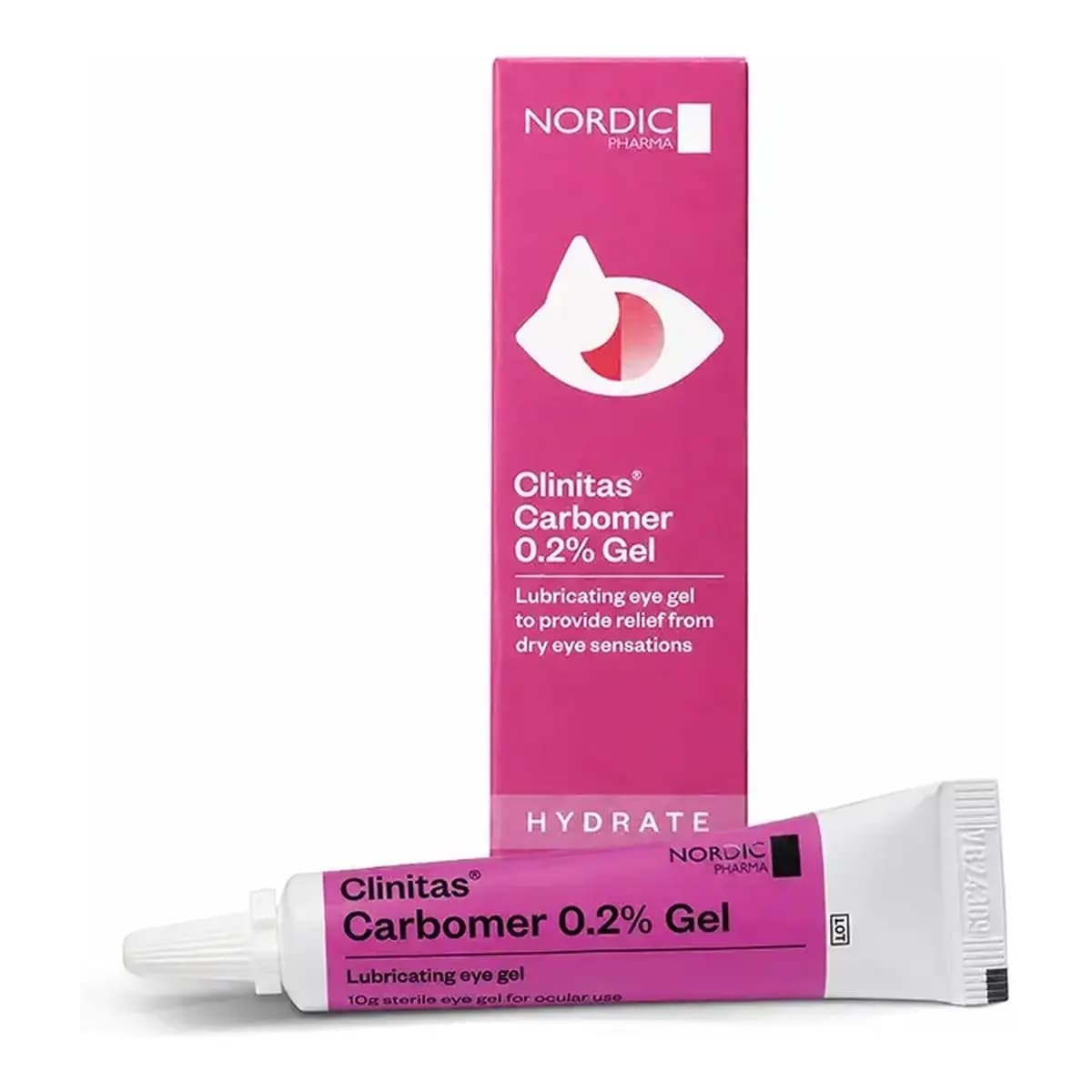
Gels are thicker. They stay on the surface of the eye for longer than a drop does, at the cost of blurring your vision briefly after you put them in.
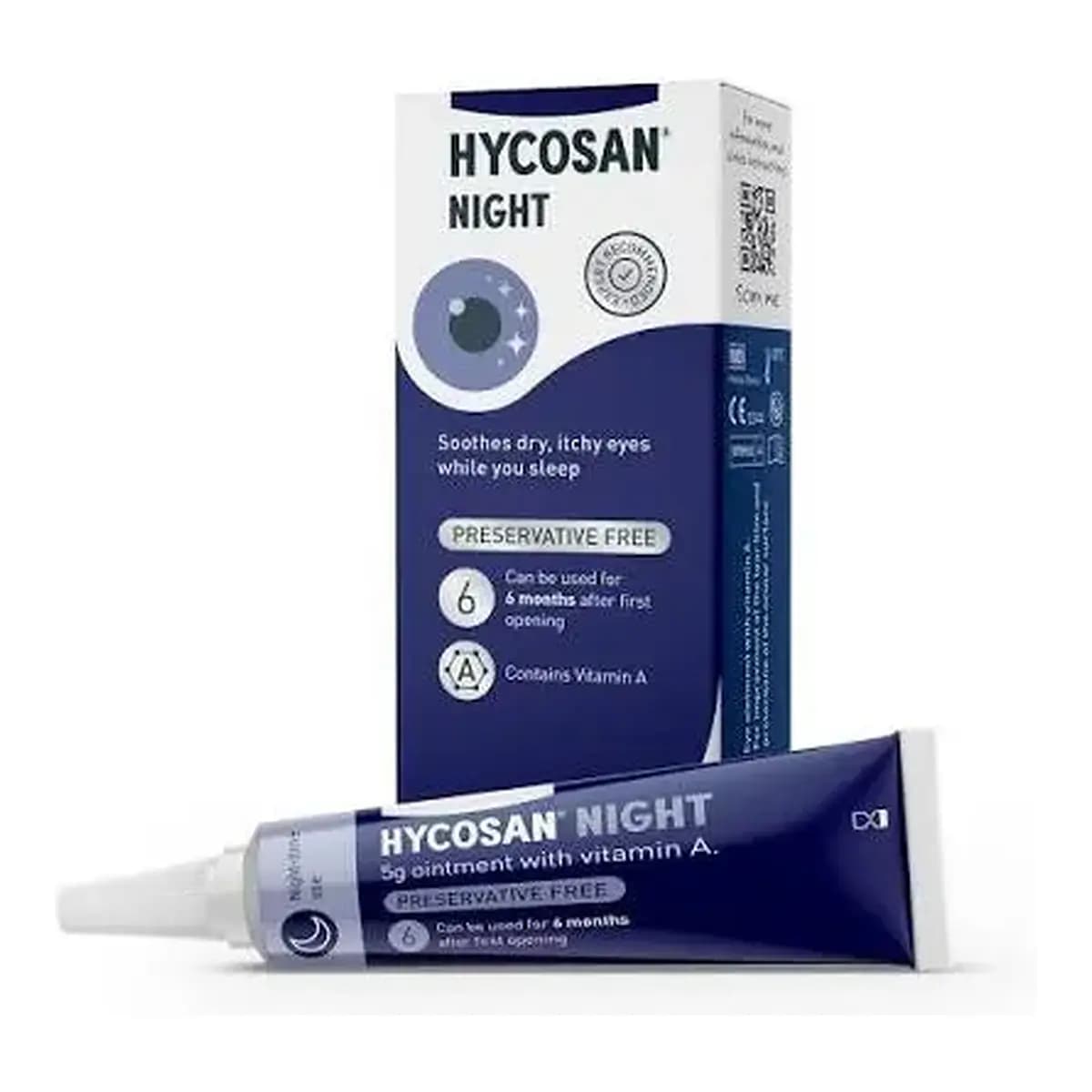
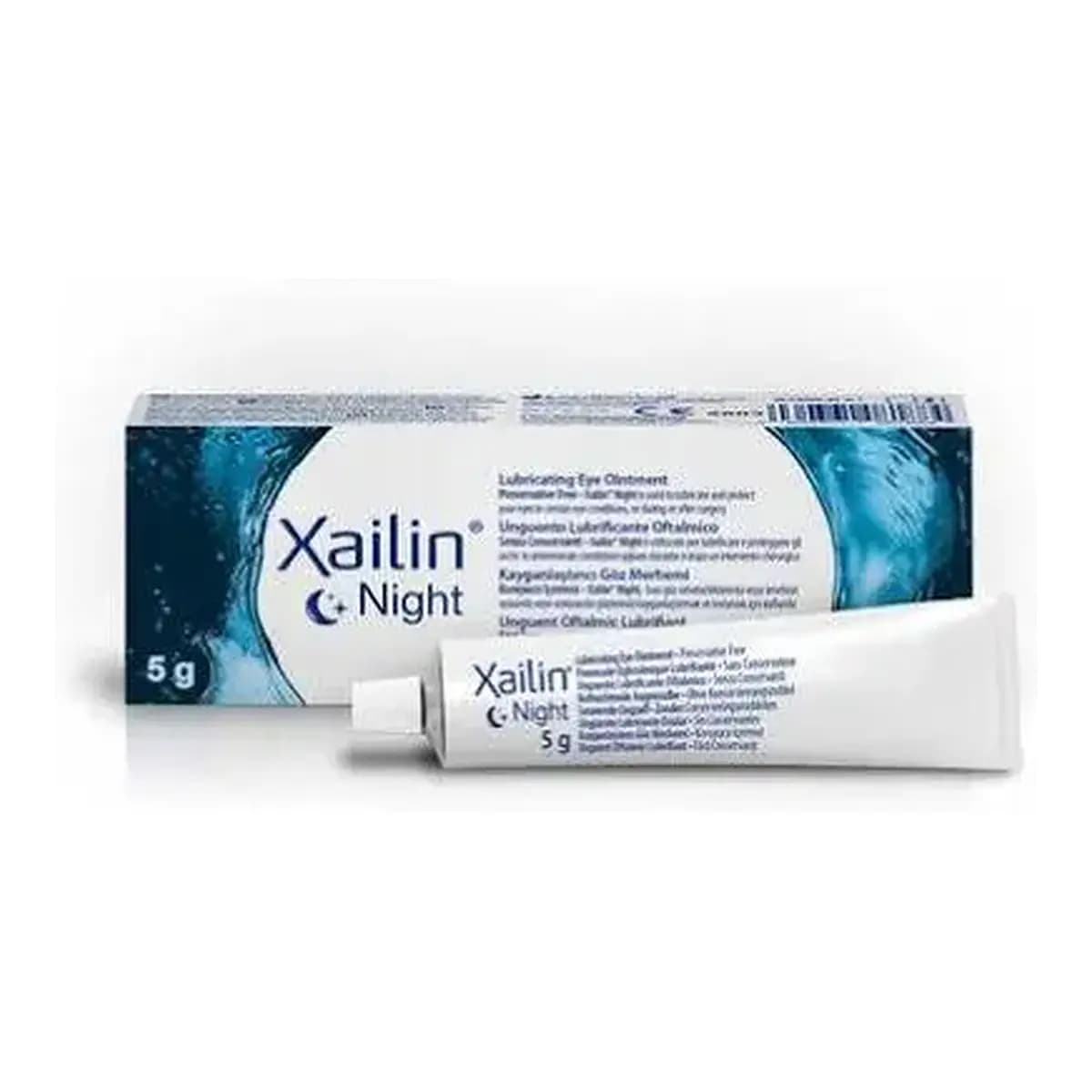
Ointments are thicker again — usually paraffin-based. They are sold for night-time use, and the packs say so: both of the ointments we stock are labelled for use at night.
That is the whole spectrum. Thinner means more comfortable to use and shorter-lasting; thicker means the reverse.
What else is on the box
Preservative-free
Most of the eye products we stock say preservative-free on the front. It means what it says: no preservative has been added to keep the bottle sterile once opened. Manufacturers achieve that with the bottle rather than the chemistry — a one-way valve, or a filter in the nozzle.
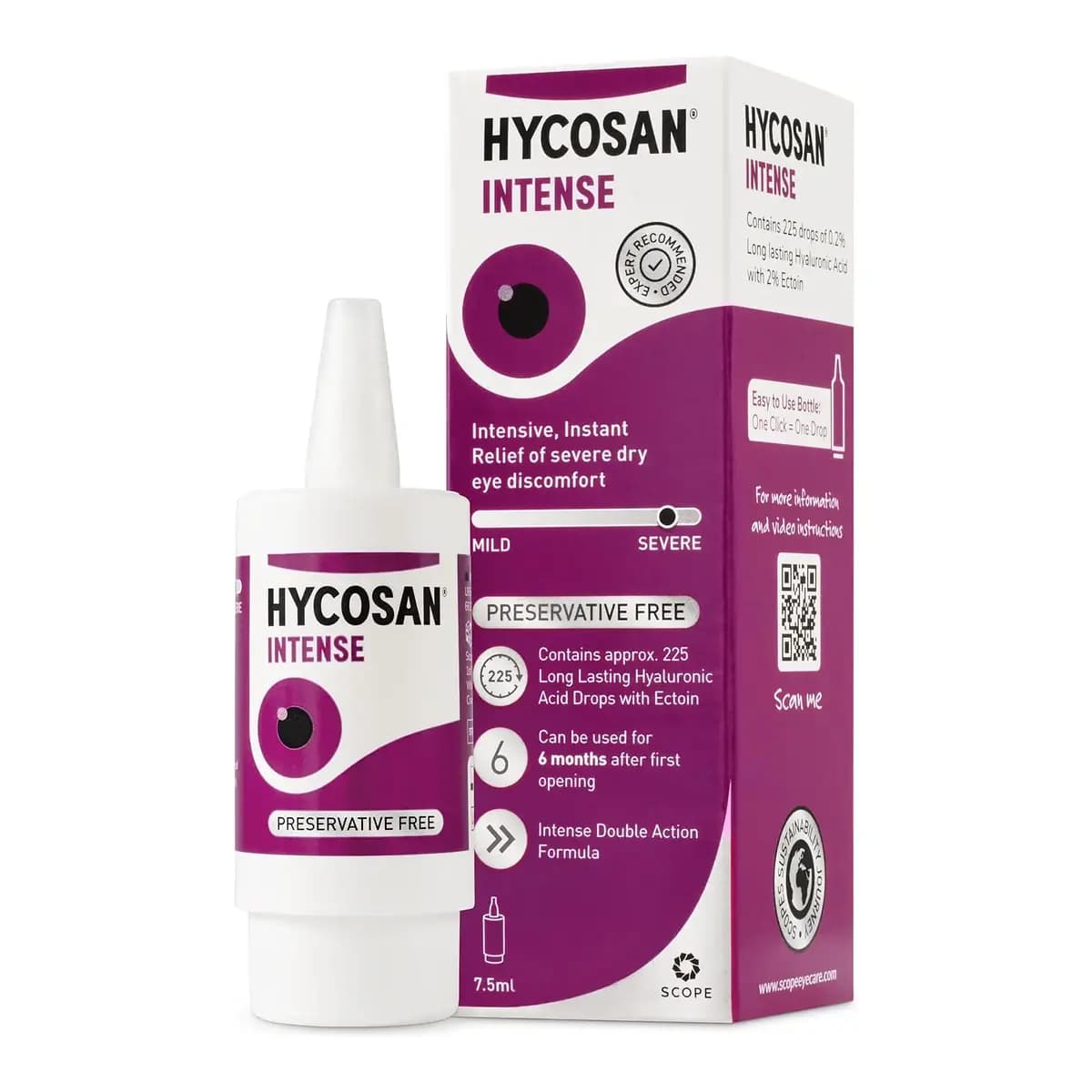
The practical consequence is on the back of the pack, not the front: a preservative-free bottle usually has a shorter life once opened, and the pack states it. Hycosan Intense says six months after opening; Thealoz Duo says three months.
Metered bottle, and a drop count
Some packs quote how many drops you get. Hycosan Intense gives approximately 225 drops from a 7.5ml bottle. That figure is useful for one thing only — working out what a bottle actually costs you per use, which is rarely what the shelf price suggests.
Contact lenses
Where a product is suitable for use with contact lenses, the pack says so. Hycosan Intense and Thealoz Duo both do. Where a pack does not say it, do not assume it.
The active ingredient
You will see three names repeatedly:
- Sodium hyaluronate — in the Hycosan range. Hycosan Extra carries a higher concentration than Hycosan Original; that is the entire difference the name is pointing at.
- Hypromellose — the long-standing generic, sold here as Ocufresh Hypromellose 0.3%.
- Carbomer — what makes a gel a gel, as in Clinitas Carbomer 0.2%.
What we are not going to tell you
Which one to use. That depends on your eyes, what else you use, and what a professional has told you, and a shop is not the place to find out. If you are choosing between these for the first time, ask a pharmacist or your optometrist — both will answer for free, and both will know things this page cannot.
What we can do is stop the packaging being a puzzle.
Always read the label and the information supplied with the product before use.